24 March 2007

Brown Lentil Soup


Melbourne is a funny city in terms of weather. Temperature difference from one day to the other can be huge. Yesterday was a scorching 37.4 degrees, and today - 19 degrees! So I felt like some soup, and made this Turkish soup that is my father's favourite.

The original recipe uses eriste (semolina based Turkish egg noodles). I buy eriste from Turkish shops in Melbourne, although this soup can also be made with rice or risi bisi pasta.

1 brown onion, chopped
2 tablesp olive oil
1 teasp tomato paste
1 tablesp plain flour
4 cups of water or stock
1/2 cup of green lentils
2 tablesp of "eriste", rice or risi bisi
1/4 teasp salt
1/2 teasp dried mint
1/8 teasp sweet paprika

Lightly fry the brown onion in oil. Add the tomato paste, stir. Then stir in the plain flour until the onion pieces are well-coated. Add the water gradually. When it starts boiling, add the green lentils. Cook, stirring occasionally. When the lentils become tender, add in eriste (or `rice or risi bisi), and cook until the eriste is tender. Add salt, mint and paprika. Serve warm.

12 March 2007

Feta Cheese Dip with Cumin


Another great dip! Serve with Turkish pide or flat Lebanese bread.

1 cup feta cheese
2 tablesp Greek yoghurt
1 garlic clove
1/2 cup olive oil
1/2 teasp dried peppermint flakes
1/4 teasp redpepper flakes
1/4 teasp ground cumin

Mash feta cheese with a fork. Crush garlic cloves and add it to cheese together with the rest of the ingredients. Stir well, place on a plate and decorate with extra mint and redpepper flakes. Serve cold.

02 March 2007

Black-eyed Bean (Pea) Salad


Kuru Börülce Piyazı
Black-eyed beans are consumed both fresh and dried in Turkey. I love the former, but have found out about the latter only recently. During my mum's short visit early this year, we were inspecting the numerous dried pulses in our corner Pakistani shop. My mum spotted these beans and told me that they were dried "borulce". So we bought a big packet. I placed the dried beans in a large bowl overnight, and boiled them in the morning (beware, cooking time is shorter than it is for some other beans such as chick peas). I placed some in the freezer, and made a nice black-eyed bean dip (which was more Moorish than Turkish). This week, I took out another batch and made this Turkish salad, as my mum said the black-eyed beans made excellent "piyaz" (dried bean salad). The more common beans for piyaz is white beans, which is the version I know, although the black-eyed beans also made a very tasty salad.

1 cup boiled black-eyed beans
2 tomatoes, chopped
1 small red onion, chopped
1 green pepper, chopped
1/4 cup flat-leaf parsley, chopped
1 teasp dried mint
salt and pepper to taste
juice of half a lemon
1/4 cup extra virgin olive oil
1/4 cup red-wine vinegar

Mix the beans and vegetables. Add the parsley, dried mint and seasoning. Mix the dressing and pour over the salad. Gently mix, and serve.

25 February 2007

Lemon Zucchini in Olive Oil


Zeytinyağlı Ekşili Kabak

Vegetables cooked in olive oil form an important part of Turkish kitchen. The vegies are well-cooked in that some may find them overcooked, but in the process, the juices are released in the olive oil and provide great flavours when combined with herbs, spices or lemon juice (as in this case). In this dish, zucchinis and lemon juice go well together forming a sour olive oil dish. Worth a try, and best served with white rice. The recipe comes from one of my cookbooks in Turkish.
I used half of the ingredients, as one kilo makes plenty. This dish can be served warm, or cold - straight from the fridge.
1 kilo zucchini (courgette)
1 cup olive oil
2 brown onions
1 or 2 green peppers
1 clove of garlic
2 tomatoes
juice of a lemon
1/2 teasp sugar
1/4 teasp salt (or to taste)
1/2 cup of fresh flat-leaf parsley, chopped

1. Wash, peel and chop zucchinis into cubes. Chop all vegetables including garlic.

2. Brown the onions until light golden. Add the green peppers. When the peppers are lightly fried, add the garlic and tomatoes. Let it simmer for a few minutes. Then add the zucchinis. Close the lid of the pot, and let it cook until zucchinis change colour from bright into dull green. If necessary, add some water (or shorten the cooking time by using microwave oven)*.

3. Add the lemon juice, sugar and salt. Let it cook for a few minutes. Check for seasoning. Add parsley, stir and let it rest for 5 minutes before serving.

* Zucchinis take a long time to cook! If you are short for time, pre-cook them in the microwave oven. Simply add 3 tablespoons of water into a bowl suitable for microwave along with the zucchinis, cover, and cook for 7 minutes on High (100%). Then proceed with the recipe.

17 February 2007

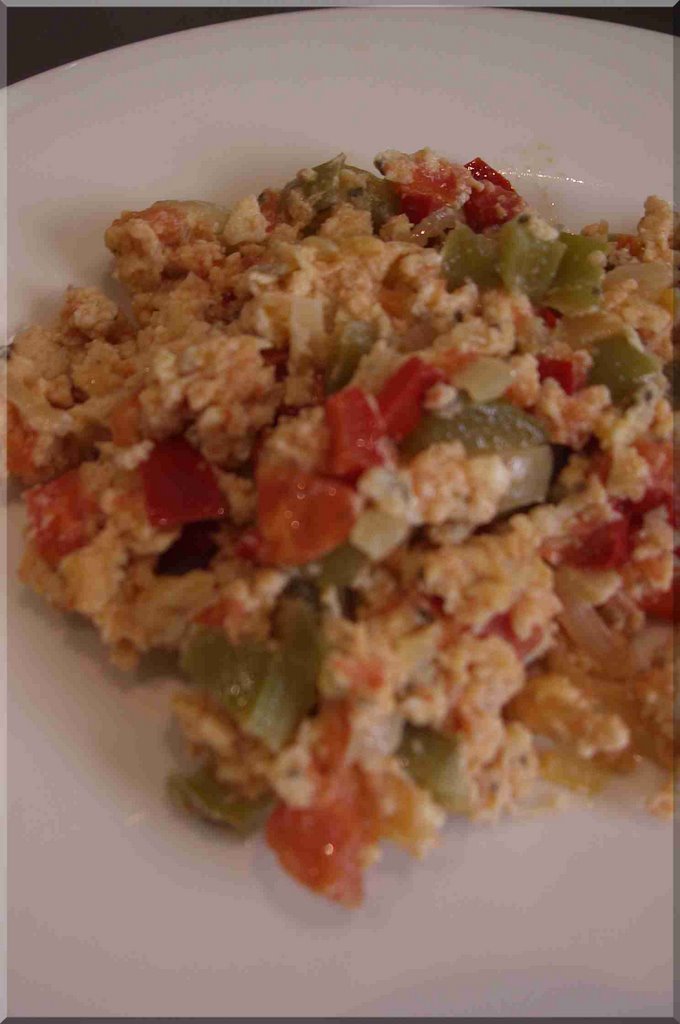
Turkish Vegetable Omelette


Menemen

This dish is simply eggs scrambled with vegetables. Rather than breakfast, it is served at lunch, or dinner as a light summer dish.

1 medium brown onion, finely diced
3 tablesp olive oil
2 green peppers or 1 capsicum, finely diced
3 tomatoes, finely diced
6 eggs, lightly beaten
1/4 teasp salt

Lightly brown the onions in olive oil. Then add the pepper, and stir occasionally until soft. Add the tomatoes, stir once, and close the lid of the pan. Once the tomatoes are well-cooked, add the eggs and salt to the vegetable mixture. Stir for a few minutes. Serve with fresh bread.

13 February 2007

ROASTED HAZELNUTS


For a while now, I have been making Egyptian Dukkah (a seed and nut-based spice mixture) at home, and the recipe calls for roasted hazelnuts. Whilst dukkah is not Turkish, roasted hazelnuts are very common in Turkey.

One of the food specialty shops in Turkey is the Kuruyemişçi. These shops sell nuts and dried fruits, displayed behind glass counters, and sold by the gram, filled in paper pags. Children grow eating nuts, especially sunflower seeds, which one has to deshell (requiring good mouth and hand coordination, and dexterity). Having grown up in Turkey, I am often amazed to find out how home-grown Australians are into lollies (Jaffas in particular), but nuts are served often with "drinks" rather than being considered as snacks.

My favourite nuts are walnuts (hence my nickname ceviz), and hazelnuts. Having discovered that the roasted hazelnuts I prepared for dukkah were no different to kuruyemisci-bought ones, I now roast extra hazelnuts, which I fill in a jar for (healthy-) snacking.

I should also add that hazelnuts are grown in the north, the Black Sea coast of Turkey. A recent event regarding hazelnut growers led to Turkish foodbloggers to join hands, and compile over a hundred hazelnut recipes on a website called Fındık Fındık (hazelnuts hazelnuts). The recipes are now in the process of being published as a book!

To roast hazelnuts:

Spread any amount of hazelnuts in a flat oven tray. Roast in 180 degrees for 5-8 minutes keeping an eye not to burn them. Once slightly browned, remove the tray. Wrap hazelnuts in a teatowel while warm, and rub them so that the brown skin falls off. Once cool, store in an airtight container.

Try mixing equal amounts of hazelnuts and dried white mulberries (or walnuts and mulberries).

27 January 2007

TURKISH RED LENTIL BALLS


This week's herb blogging event is hosted by Tomato, and coincides with the Australian Day weekend. My dish, red lentil balls, uses flat-leaf parsley together with green onions.

Kırmızı Mercimekli Köfte

These red lentil balls originate from eastern and south-eastern regions of Turkey. They are easy to make, and are delicious, especially when wrapped in lettuce leaves. Serve warm as a nice vegeterian dish; or cold, as a salad or side dish. Do not hesitate to adjust the amount of spices and herbs to your liking (e.g., exclude cumin, add cayenne pepper, etc.).

The bulghur variety in this dish is the fine version (as opposed to the coarse one) - available at Middle Eastern shops. You may also try this dish with green lentils, but they take longer to cook, so will need more water.

2 cups water
1 cup red lentils
1/2 cup fine bulghur (cracked wheat)
1/2 cup olive oil
1 clove of garlic, minced
1 large onion, chopped finely
1 teaspoon of tomato paste (optional)
1 teaspoon cumin (optional)
1 teaspoon paprika
½ teaspoon salt
1/4 teaspoon black pepper
1/2 cup fresh, chopped flat-leaf parsley
1/2 cup green onions (scallions)

Bring two cups of water to boil in a pot, and add the lentils. Cook in low heat until the water is absorbed, and the lentils are mushy. Turn off the stove, and stir the bulghur into lentils. Let the mixture rest for 15 minutes to allow the bulghur to soften and expand.

In the meantime, fry the finely chopped onion and minced garlic in olive oil until lightly browned. Add tomato paste at the last minute, stir and turn off the stove.

Add the fried onion and garlic into the lentil mixture along with the spices and salt. Lightly knead until the ingredients are mixed. Taste, and adjust salt and spices. Add the parsley and green onions, and lightly knead. Shape the mixture into egg-shaped balls. Sprinkle with paprika, and serve with lettuce leaves.

19 January 2007

Hummus (Humus, Tahini Chickpea Dip)


Hummus is among my favourite dips, as I love chickpeas. The homemade version is almost always superior to the shop-bought ones, so it is worth the effort, especially if you precook chickpeas instead of using tinned ones. I precook dried chickpeas, and freeze them in small portions, some of which I use for hummus and the rest in chickpea dishes (sometimes vegeterian and other times with diced lamb or chicken).

This tahini dip is well-known in the Middle East, and more common in the southeastern parts of Turkey, bordering Irak, Iran and Syria. In fact, the southeastern Turkish kitchen has more in common with the Middle Eastern kitchen than it has with the western regions of Turkey. The recipe below comes from Abla Amad's Lebanese Kitchen. This recipe makes enough to use over two days. Do not hesitate to adjust the amount of lemon juice v. tahini according to your liking. I sometimes use less tahini to reduce the amount of oil in the dip.

Try spreading it on a piece of bread, and lining it with a slice of cheddar cheese.
Try sprinkling it with dukkah or za'tar.

1 1/2 cups dried chick peas (or 3 cups canned chick peas)
1 teaspoon bicarbonate of soda
1 1/2 teasp salt
1 clove garlic
1 1/4 cups tahini
2/3 cup lemon juice
4 tablesp water (optional)
1/2 teasp paprika
1 tablesp fresh parsley
1 teasp olive oil

1. Cover chick peas with water, add bicarb of soda and soak overnight (I normally don't add bicarb of soda, which is said to cut the cooking time by half). They should double in volume. Make sure that the bowl is reasonably large, as the chick peas expand considerably when soaked (Use more chick peas, say 1/2 kilo, if you wish to freeze the rest in smaller portions).

2. Next day, drain chick peas, cover with fresh water and bring to a boil in a large saucepan. Reduce heat, cover and simmer for about 40 minutes or until chick peas are very soft. Drain.

3. Crush salt and garlic together in a food processor, add cooked chick peas and blend until smooth, gradually adding tahini and lemon juice. When blending, stop to combine mixture and scrape down the sides. Add water if you prefer a thinner consistency.

4. To serve, place humus on a small platter or in a bowl. Sprinkle with paprika, arrange parsley around the edges and pour olive oil over.

13 January 2007

POTATO SALAD


Patates Salatası

This salad is full of potatoes, but very tasty and light - common home Turkish cooking, yet rarely served at restaurants. The recipe is from Ayla Algar's Complete book of Turkish Cooking. (Her books, if you don't mind the lack of photos, are among the best Turkish cookbooks). Her recipe does not have sumac, which I always add following my mum's method.

1/2 kilo potatoes
1 red onion
1/2 bunch of parsley or dill, chopped
1/2 cup olive oil (or less)
1/4 cup red wine vinegar
2 tablespoons lemon juice
1/2 teaspoon dry mustart
sea salt and black pepper, to taste
1 dozen black olives
1 tablespoon sumac

1. Half the onion lengthwise, then slice paper-thin. Rub with sumac.

2. Cook the potatoes in boiling water until tender. Peel and slice very thin into a salad bowl (I prefer dicing). Cool. stir in the onions, dill or parsley. (Alternatively, for a quicker version, wash, peel and rewash the potatoes. Dice them, and cook for five minutes in microwave oven set on high, covered and with a few tablespoons of water.)

3. Combine the oil with the vinegar, lemon juice, mustard, salt and pepper to taste. Blend well. Pour enough dressing over the salad to moisten; mix thoroughly. Adjust the salt and add more vinegar if necessary. Garnish with black olives. Serve at room temperature. 6 servings.

Note. Ayla Algar's book above is out of print. I had purchased mine on biblio.com. Her more recent book Classical Turkish Cooking is quite similar, and available on amazon.com.

Note2. I have recently come across with a very similar version by Bill Granger in one of the delicious. magazines. I suspect it was a slightly altered version of this Turkish salad.

21 December 2006

Herb Zucchini Fritters (Mücver)


These fritters are one of my favourites, from my mum. She serves them as is. This version is served with garlic yoghurt following a recipe from one of my cookbooks. You could even top it up with a tomato-garlic based homemade sauce. It can be served as a side dish, or starter. It is just as nice served cold, and makes a light main dish in summer.

5 eggs
2 medium-sized zucchinis, peeled
4 tablesp. white flour
1/2 bunch of parsley, finely chopped
1/2 bunch of dill, finely chopped
4 tablesp. oil

Sauce:
Mix one cup of Greek yoghurt with a clove of crushed garlic.

1. Break the eggs in a deep bowl.
2. Grate the zucchinis. Squeeze the water off. Add the grated zucchinis to the eggs together with the parsley and dill. Mix all using a fork.
3. Add the flour, continue mixing. Add the salt.
4. Heat the oil in a shallow non-stick pan. Add spoonfuls of mixture into the heated oil. Cook until pink on both sides.
5. Transfer to a plate. Serve warm topped with garlic yoghurt.

Alternative: For a lighter version, spread the mixture in a shallow oven tray (greased and dusted with flour), and cook in 180 degrees. Slice prior to serving.